Torso length limits in grading
Grading patterns across extended sizes scale outward faster than they scale downward. Most factory patterns increase chest circumference and waist width with each step up, but vertical body length plateaus past the 2X mark. A shopper taller than five feet eight inches will notice the front rise pulling upward because the base block remains calibrated to an average height.
The result is downward tension on the shoulder straps and upward tension through the leg openings. When a pattern stops adding vertical inches, the lace must stretch along its lengthwise grain instead of its crosswise grain. Knitted lace has far less give along the vertical warp than along the horizontal weft, which causes vertical tightness on longer frames.
Underbust tension in 3X pieces
A 3X band often measures smaller on the body than flat charts suggest. Elastic sewn directly onto stretch mesh loses some of its recovery once pulled around the ribcage. The stitch pattern used to attach the band creates small anchor points that restrict the native stretch of the rubber thread inside the casing.
Fabric density changes under tension. In larger cup and band sizes, the weight of the garment distributes across a broader underbust perimeter, causing the band to roll or dig if the elastic strip is too narrow. A band under three quarters of an inch wide tends to fold over under pressure from the torso.
Look for garments that feature back hook-and-eye closures rather than solid pull-on loops. Mechanical closures take tension off the lace seams and distribute the pull across three or four rows of metal eyes, preventing the elastic from overstretching prematurely.
Limits of adjustable shoulder straps
Shoulder sliders provide roughly four inches of total travel. Shortening the strap raises the apex of the cup and lifts the bust line, while lengthening drops the neckline and eases pressure on the shoulders. These adjustments change vertical placement on the chest, but they do not alter the distance between underbust and crotch.
Relying on strap length to fix a short torso creates problems at the neckline. If you let the straps out completely to gain torso room, the cups sit below the natural bust curve and the armholes gap outward. The strap can position the neckline correctly, but the garment body itself must match the pelvic rise.
Seams that maintain structure
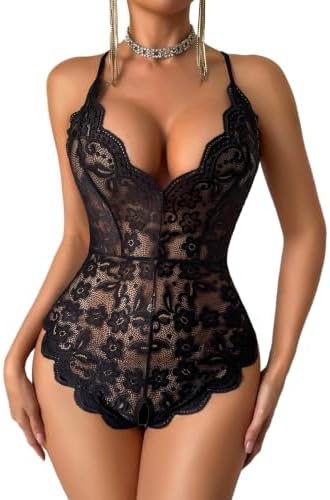
Princess seams running from the underarm down to the leg opening offer the most reliable hold in larger sizes. These vertical lines break up broad lace panels into narrower sections, which limits fabric distortion across the waist. Straight vertical stitching also distributes tension evenly from top to bottom.
Single-panel front cuts lack this internal architecture. Without vertical dividing seams, stretch lace expands outward at the widest point of the torso, causing the waist area to pull thin and lose its shape. Garments with reinforced center-front seams or side-body boning channels keep their profile under constant wear.
Cuts suited for upper sizes
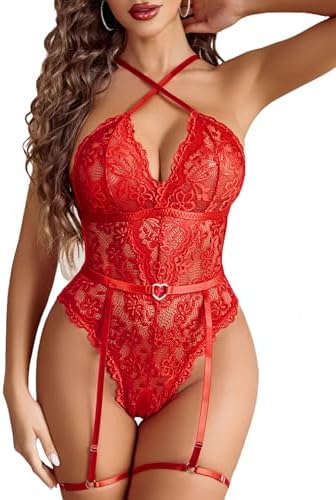
Plunge halter teddies and wide-leg snap-crotch bodysuits handle larger measurements with the fewest fit issues. A halter neck removes shoulder-to-hip tension entirely by transferring the upper anchor point to the back of the neck, letting the body hang naturally along the torso.
High-cut leg openings reduce fabric bunching at the hip joint. When the leg ring sits higher on the pelvic bone, the garment requires less horizontal stretch around the upper thigh, freeing the material to span the lower abdomen without pulling the crotch gusset forward.
Adjustable shoulder straps change neck drop and cup height, but they cannot compensate for a short vertical torso measurement.